Sunday, January 29, 2012

The Modern Museum


Around the world the museum is a monument, an institution like the library and the postal system, denoting a level of societal achievement.  It can lend a small town in Nebraska a place in a travel guide.  It can elevate a nation into history.  A museum-goer may carry a small ball of pride and harbor a pinch of superiority at the time well spent.

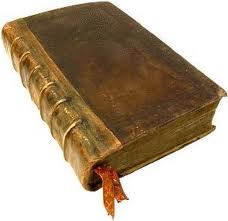
The museum is a collection of objects of scientific, artistic, cultural, or historical interest arranged and displayed in accordance with a logical method and made available for public viewing through exhibits. The word ‘museum’ is of Greek origin, and meant a space dedicated to the muses - "a place where man's mind could attain a mood of aloofness above everyday affairs."  (Abridged definition taken from both Wikipedia and Dr. Wilson's Cabinet of Wonders)  To that end it was a place to mediate upon the world and practice the arts.  The first museum may have been an Athenian institute created by Plato or merely a hill in Athens upon which an old man sat and sang until there he died, was buried, and thus created a sanctuary.  And in that dual origin story we find both the beauty and the problem with the museum.  What is a museum meant to do?


Consider the museums of your lifetime.  Though they may preserve beautiful paintings or historic carvings or awe inspiring fossils the museum can be a drool, potentially depressing archive of the past ensconced in a pristine and grand manner.  Like a mortuary of human and natural spectacles, some sort of continual funeral without a burial in sight, the museum preserves the past in an antiseptic manner.   Perhaps inevitably so.  Perhaps there is no other way.

Walking the halls we hover somewhere out of time, induced to drowsiness by the atmosphere, as if a magical spell poured in through the vents, a potion that frays the fabric of time until we stumble about in a waking dream state.   Like Rip Van Winkle we doze off and awake to find years have passed except in the case of the museum the years roll backward upon the rails not forward.


In this state we are not taken away on flights of fancy, but instead we are led down a road of rigorous delineation of the world as if everything has its proper place.  Here the world is separated and catalogued.  The museum portrays a world of progress from age to age and culture to culture that ticks along like clockwork.  All the chaos and uncertainty and ambiguity of the world becomes domesticated in these halls.  It’s as if we wish to enclose Nature and History in a series of labelled Ziplock bags, as if we believe a stately institutionalized palace could hold them in all their wonder.

All this certainty lends authenticity and authority.  Who can argue with the art masters,  the scientific pioneers, and the world explorers when all in one place?  Who can question the answers of learned experts, recorded voice-overs, brochures, and captions neatly printed on foam core and mounted with the utmost attention to tidiness?

Somehow this is the world we are more at home in though it is something fabricated, only a model of the world as it is.  We can lounge in the well ordered and catalogued room with sharp distinctions.  We breath easily in the home that works along well governed laws with no alternate answers.


The question is:  Is it Real?

Next up:  The Cabinets of Curiosity, the original manifestation of the museum.  And don’t worry this is going somewhere culinary and delicious.

Saturday, January 14, 2012

In the Search of Wonder


This year We are about to embark upon a long tale.  It has many twists to it, and at times will appear confusing and even ridiculous, but the terminus will warrant the journey.  It must begin somewhere which is here for lack of a better starting point.

“Whenever we encounter some truly novel phenomenon, one that reinvents the margins of our world, an old hankering is awakened. At such moments we are like explorers of an unknown dimension: everything appears fresh to our eyes, each idea seems unprecedented, virgin, strange. In the face of this newly made universe, we may be tempted to exclaim, ‘It cannot be!,’ yet our protests soon lie buried under an avalanche of wonder.”

-       Dr. Wilson’s Museum of Jurassic Technology

There are things we do not understand in the World.  We approach them with anxiety unaware of what will happen.  We prepare ourselves for the Unknown and that ‘avalanche of wonder’.

There are those who seek this ‘Wonder’.  In their adventures they blaze a trail for others to follow.  This may result in an epic tale such as The World Travels of Marco Polo or a universal theory of relativity as with Albert Einstein.  Or as in the case of Auguste Escoffier it may be an enduring approach to all things culinary: recipes, kitchen organization, the creation of the chef profession.  All of which have transformed our world today.  Whatever our specialty may be, we adore those who embark upon the ‘margins of our world’ and elicit that state when ‘everything appears fresh to our eyes’.  It may be said that Chef Nordo Lefesczki, despite his crank and quack, is one such pioneer currently blazing his trail with the Carnal Food Movement.

There are those who record the Wonder.  When such Luminaries exist there must be a way to record and share the achievements.  It may be as simple as a university physics book or a painting that now hangs in the Louvre, an index of World Records or an urban myth that travels the globe on the lips.  In the case of Chef Nordo it is a Cabinet of Curiosities set to appear in Seattle in May of 2012.  For a few short weeks a selection of the Cabinet’s exhibits will be open to the public.  This is an extremely rare opportunity, one that people wait for, a once in a lifetime affair.

As we all know, food is a precious and overlooked necessity to life.  And it is Chef Nordo’s goal to rekindle the wonder of the world of food in everyone through his crafts of cooking and storytelling.  It could be said this Cabinet includes every idea, fact, myth, and imaginative spark ever to be inspired by our food.  CafĂ© Nordo is the stage for Chef Nordo’s stories.  The Cabinet of Curiosities is the repository of all that knowledge.

Someone must keep this knowledge alive.  Here, it is stored.


Down a rabbit hole.  Swept away by a tornado.  Tumbled into Slumberland. 
Visited by the spirits of Past, Present, and Future.

This is the only way to describe what Nordo has in store for us in his next and most outlandish endeavor yet.  Stay tuned as we explore this Cabinet of Curiosities in anticipation of its Grand Opening in Seattle 2012.

Sunday, November 13, 2011

Part 3- Tomorrow's New World Order


And here, before we launch into the New Year, the final chapter of the Petra Proudhurst papers. 

What are we to do with this knowledge of the Space Age?  Do we waste it letting it rot in the laboratories of the world?  Or do we step boldly forward with this knowledge and ensure a better future?  The choice is obvious.

As the leaders of the world it is our responsibility to respond to the challenges of the future and focus our resources and imagination on solutions.  I say let our imaginations shine.  We cannot stand idly by and expect our dreams to come true under their own power.  The future is not a gift but an achievement.

I look into the laboratory and see a future in which struggle for sustenance has vanished.


I envision supermarkets overflowing with the foods of the world.  Piles of fruits and vegetables in the heart of winter.  Aisles of canned soups and packaged dinners.  I see jars of cured meats for .45 and cans of tropical fruit 5 for a $1 from Kansas City to Singapore.  A fully nutritious meal for a family of 4 will be prepared in under 15 minutes.  And for desert, individually wrapped pies for the whole family.  Now you can have your cake and eat it too.

In the future, supplements will counter deficiencies in vitamins and minerals.  Artificial flavors will provide the spice of life to any dish.  With advances in food preservation the daily trip to the grocery store will not exist.  The pantry will be the breadbox of the home.

As this new technology expands around the globe there will be the inevitable excess of grain.  Imagine cheap breads for every child.  A limitless food source for our livestock.  Meat prices will plummet and the food of kings will be for every man. With new food resources social equality will simply grow on the tide of abundance.  It is simply a matter of vision and willpower.

Man has worked with nature from its beginnings to create a more hospitable world.  It is our magic touch to use our imagination to improve our world.  It is not a utopia but it is a step in that direction.  Now is the time to act.  Do not hesitate. 

I am confident in the engineering of today for a better tomorrow.

The struggle against Convenience Food continues.

Sunday, November 6, 2011

Secrets Part 2


Frontier of the Future

The world today is made, is powered, is penetrated through and through with science.  Let us look into the face of the future.  We see the long shadows of problems that already extend across the land today.  Increasing populations, diminishing resources, pollution of sea and air.  Is this the prospect we face?  Or through knowledge and understanding can we shape our future into one more befitting the human dignity and spirit.

We look to the frontiers of the future with confidence that man will master nature through understanding.  And it is to this end of understanding that we scientists labor today.

19 years ago, in 1943, Mexico faced droughts that threatened millions with starvation because of a virus; stem rust.  My mentor, Norman Balroug, plant geneticist and pathologist, arrived with radical ideas straight from the laboratories of Dupont.  Immediately, he setup a facility financed by the Ford and Rockefeller Foundations.  Under his hand we developed a wheat variety resistant to stem rust using multiple pure lines as parents.  This alone saved thousands of acres of crops.  But Norman did not stop there.

He began breeding varieties that absorb more nitrogen and so grow more grains.  He introduced nitrogen fertilizers that doubled the yield on a single stalk.  But these plants bent and broke under their productive weight.  Field after field toppled over as if a hurricane had swept through.  I had the great opportunity of witnessing his most brilliant moment.  He brought over Japanese dwarf wheat with a thicker stem, the Daruma, and melded that wheat variety into the population.  The result, a sturdy, productive plant.

Doctor Balroug created the first high-yield variety plant, resistant to disease, responsive to fertilizers, accepting of pesticides, and thus began the Green Revolution.  Today, Mexico exports wheat to the rest of the world.

We have isolated the beneficial genes of wheat, corn, and rice and cloned them.  GA 20 increases oxygen intake.  Rht reduces height.  Sd1 dwarfs the rice plant. The earth is a machine.  It can be improved as any other machine provided you have the right tools.  We have developed these tools, and they promise a wealth of results.

Tests have begun in India in the Punjab province that will triple food production there.  In Southeast Asia the new rice strain, IR8, has left our laboratory and entered the farmer’s field.  Beginning this year, Standard Oil of New Jersey will supply the farmers of the Philippines with seed packets complete with individually developed pesticides and nitrogen pellets.  In the same packet.  Imagine.

There is an old Byzantine proverb that says, “He who has bread has many problems.  He who has no bread has only one problem.”


Human ingenuity has taken the head seat at the table and presented us with a new range of tools so that we need not worry about that one problem.  We can alter the very structure of life to suit our needs.  This is opportunity, plain and simple, to save our tomorrow. We have created answers to our challenges.  We have created a global agriculture industry the world will never forget.

Thank you.